Loading...

- About
- Exhibit
- Attend
- What's on
- Exhibitor Directory
- Infos auf Deutsch
- Show more
Mention wine in Stuttgart and you're talking in superlatives: local vintners are regularly awarded prizes for their wines.
The main wines grown in the Stuttgart Region today are the red varieties Lemberger, Spätburgunder and Trollinger. Trollinger is as inextricably linked to the region as Porsche and Mercedes-Benz are to Stuttgart. This fruity, light red wine matures late and can also be enjoyed when it is still young, nicely chilled. As far as white wines are concerned, Riesling leads the field and is made into outstanding wines by local vintners. Other varieties include Kerner, Silvaner and Müller Thurgau. In addition, Sauvignon blanc is gaining in popularity with wine drinkers, and therefore also in importance with wine growers.
The state capital of Stuttgart is the only German city to own 17.5 hectares of municipal vineyards, spread over six different locations. Vineyards can even be found in the city centre. In order to be able to access the steep terraces, vintners in the second half of the 19th century built flights of steps and paths. More than 400 of these "Stäffele", or steps, are still in existence today. Climbing them all would involve negotiating a total 20 km of steps.
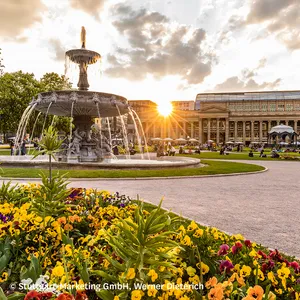
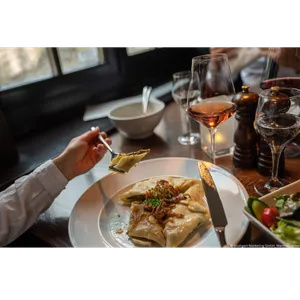
There are many wine festivals held throughout the year, such as the Fellbach Autumn Festival or the "Stuttgart Wine Village", one of Germany's biggest and best wine festivals. Every late summer/autumn, more than 500 different wines from Baden and Württemberg are served in the 120 arbours set up around the Old Palace. To go with them, chefs serve Swabian specialities such as "Kässpätzle" (cheesy noodles), "Maultaschen" (filled pasta, like Ravioli) or potato noodles with sauerkraut.
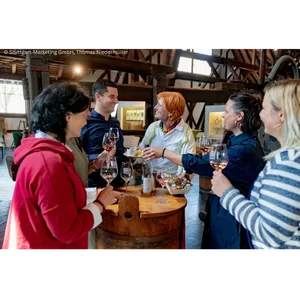
A typical feature of the wine region of Stuttgart are the so-called "Besenwirtschaften", or "Broom Taverns": temporary wine taverns that are only open for twelve weeks of the year. The name derives from the broom that hangs at the door to show they are open for business. Only the wine grower's own wines may be served. It is usually served in traditional fashion, not in a long-stemmed glass, but in glasses with a handle that are typical of the region.
Let yourself be inspired by Stuttgart's wines, Kessler Sekt (Germany’s oldest producer of sparkling wine) and and non-alcoholic specialties - join our "Wine o'clock" on Tuesday and Wednesday at 4.00 p.m. at both F140.